
Blog posts tagged "ROS"

Goodbye Thanksgiving (well, for some of us), hello Christmas! The holiday season really is the best, and it always brings interesting robotics news, which we will now distill into a quick dose of delightful and easily-digestible tidbits. As always, if you’d like to see your work showcased here, please send an email to robotics.community@c

Introduction Our simple ROS 2 talker and listener setup runs well on a single Kubernetes node, now let’s distribute it out across multiple computers. This article builds upon our simple ROS 2 talker / listener setup by running it on multiple K8s nodes. At the completion of this setup expect to have a ROS2 Kubernetes
This post marks the one year anniversary of the Ubuntu Robotics newsletter: the place we showcase our work and discussing cool robotics happenings.

Come and connect with the Ubuntu robotics team on November 12th to answer all of your questions. This is the first time ROSCon has ever been virtual and is the first time it’s ever been free to attend, so we’re looking forward to seeing tons of new faces! We have ROS experts and field engineers ready and waiting to talk.
So that’s the summer gone (hopefully, that heat was awful). Or winter if that’s where you are. Seasons change and so does the state of robotics. Fortunately, that’s what we’re here for. Before we get into it, as ever, If you’re working on any robotics projects that you’d like us to talk about, be sure
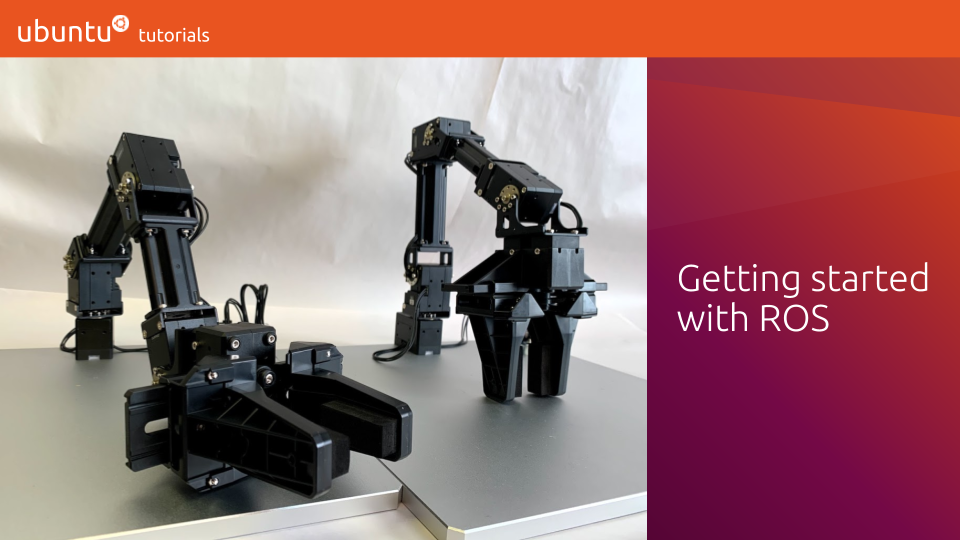
ROS, the Robot Operating System, is the platform of choice for robot development. However, the breadth and depth of existing documentation can be daunting for the ROS beginner. Where should you start learning about ROS 2 on Ubuntu? All robots based on ROS and ROS 2 are programmed using five simple but core constructs: Nodes

The snapcraft CLI (the tool used to create snaps) has long had support for building snaps that use both ROS 1 and ROS 2. ROS 2 Foxy Fitzroy is the latest ROS 2 LTS, which runs on Ubuntu 20.04 (Focal Fossa). The snapcraft CLI recently gained experimental support for building Foxy snaps, so I wanted
We know a lot of you are on vacation so we’ll keep this month’s State of Robotics edition short and sweet. Try out the Hello World of ROS Looking for an easy way to get familiar with ROS 2? We recently published a few helpers on how to simulate robots with turtlesim to help our

Interested in getting started in robotics? There’s no need to purchase expensive hardware before you try some things out: simulate a TurtleBot3 instead! The simulator is complete with LIDAR, a camera, a gyro and many other sensors and actuators. You can also see this installation in action at the Ubuntu Robotics YouTube channel. Software

We’re pleased to announce that the Center for Internet Security (CIS) has publicly released the ROS Security Benchmark for community discussion. When published, this benchmark will document community best-practice configuration settings to properly secure ROS Melodic running on Ubuntu Bionic. Hopefully this is just the beginning of an ong

Robotics@Canonical puts a strong focus on the migration from ROS to ROS 2. ROS 2 benefits from many improvements, especially robot security. Our goal is to make it easy for you to transition to ROS 2, whether you’re completely new to ROS or a seasoned engineer retooling for a new environment. Your new platform should
ROS, Ripple and reflections – In this month’s edition of The State of Robotics, we’ll tell you about the recently discovered Ripple vulnerability, the latest and greatest in robots reflecting nature, and a dash of news from the ROS universe. Foxy Fitzroy released ROS 2 Foxy Fitzroy was released on June 5 for Ubuntu 20.04.

In this post, we will see how we can containerize our home in LXD simply managing our personal configuration files – a.k.a. dotfiles. Yeah dotfiles, named after their common ~/.my_config form, you know, all of those small configuration files lying across our $HOME. In other words, how one can change the house while keeping the
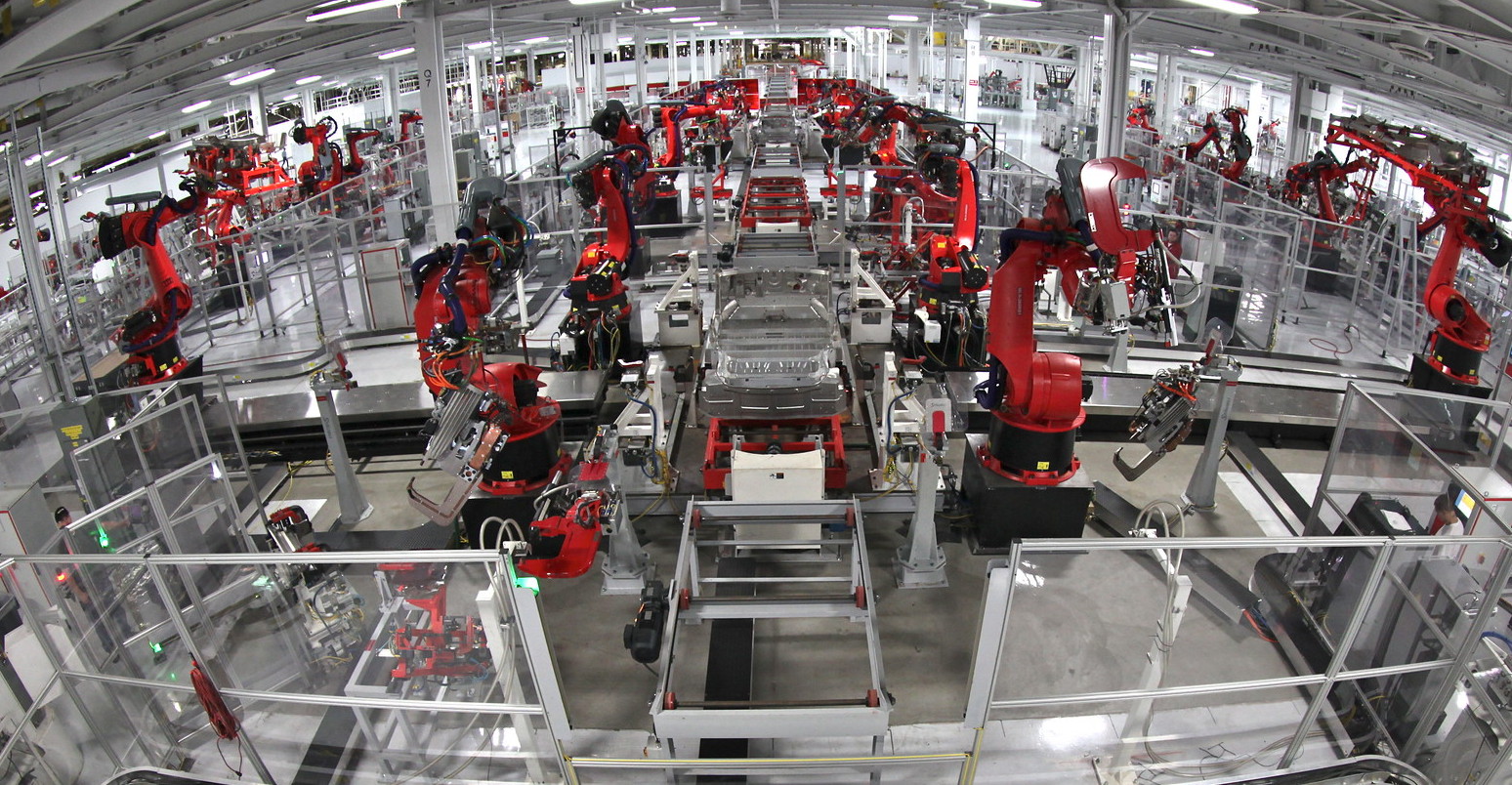
It’s the season for updates. The last few weeks have ushered in ROS 1 Noetic and ROS 2 Foxy, both of which target the recently released Ubuntu 20.04 Focal Fossa. As always, new releases come with trepidation: how can I install new software and test compatibility, yet keep my own environment stable until I know

We’re pleased to welcome the newest ROS 2 release, Foxy Fitzroy. A long-term support (LTS) release, (supported for three years), Foxy runs on the latest Ubuntu LTS, the also-recently-released Ubuntu 20.04 (supported for five years, or even longer with an ESM subscription). Putting together a distribution like Foxy is a ton of work. Open R
With several countries finally emerging from lockdowns and markets showing signs of economic recovery, we’ve seen the newscycle steadily shift its focus away from Covid-19. And that will be reflected in our robotics recap as well. Let’s get right to it. Final ROS 1 version release ROS Noetic Ninjemys was released this month on World