
Blog posts tagged "MLOps"

Kubeflow is an open-source MLOps platform that runs on top of Kubernetes. Kubeflow 1.6 was released September 7 2022 with Canonical’s official distribution, Charmed Kubeflow, following shortly after. It came with support for Kubernetes 1.22. However, the MLOps landscape evolves quickly and so does Charmed Kubeflow. As of today, Canonical

Charmed Kubeflow is Canonical’s Kubeflow distribution and MLOps platform. The latest release shipped on 8 September. Our engineering team hosted a couple of livestreams to answer the questions from the community: a beta-release webcast and a technical deep-dive. In case you missed them, you can read the most frequently asked questions (FA

Kubeflow 1.6 was released on September 7, and Charmed Kubeflow 1.6 (Canonical’s distribution) came shortly after, as it follows the same roadmap. Charmed Kubeflow introduces a new version of Kubeflow pipelines as well as model training enhancements. Read our official press release. Kubeflow pipelines: a better user experience Kubeflow pi
The latest release of Canonical’s end-to-end MLOps platform brings advanced AI/ML training capabilities 8 September 2022- Canonical, the publisher of Ubuntu, announces today the release of Charmed Kubeflow 1.6, an end-to-end MLOps platform with optimised complex model training capabilities. Charmed Kubeflow is Canonical’s enterprise-rea

We are happy to announce that Charmed Kubeflow 1.6 is now available in Beta. Kubeflow has evolved into an end-to-end MLOps platform for optimised complex model training. We’re looking for data scientists, ML engineers and developers to take the Beta release for a drive and share their feedback! Read on to learn more. Read more

MLOps pipelines are a set of steps that automate the process of creating and maintaining AI/ML models. In other words, Data Scientists create multiple notebooks while building their experiments, and naturally the next step is a transition from experiments to production-ready code. The best way to do this is to build an effective MLOps pip

The financial services sector is adopting Artificial Intelligence technologies at a growing rate. Areas such as asset management, algorithmic trading, credit underwriting, blockchain based finance solutions, fraud detection and claims processing have all seen increased adoption of Machine Learning to drive more robust data-driven decision

Introduction Charmed Kubeflow is an MLOps platform from Canonical, designed to improve the lives of data engineers and data scientists by delivering an end-to-end solution for AM/ML model ideation, training, release and maintenance, from concept to production. As a result, Charmed Kubeflow includes Kubeflow Pipelines, an engine for orches

Canonical is once again proud to be a sponsor of the Nvidia GTC event! Happening virtually on November 8-11, the conference will feature a wide variety of sessions on AI, computer graphics, data science, and more. Register for the event During this GTC, Canonical will be hosting two sessions. Join for us a co-hosted speech

Register for free What is Operator Day? Operators simplify everyday application management on Kubernetes. Learn how to use them, how to create them in Python, and how to evolve from configuration management to application management. We’re working to create a community-driven collection of operators for everything that’s integrated and te
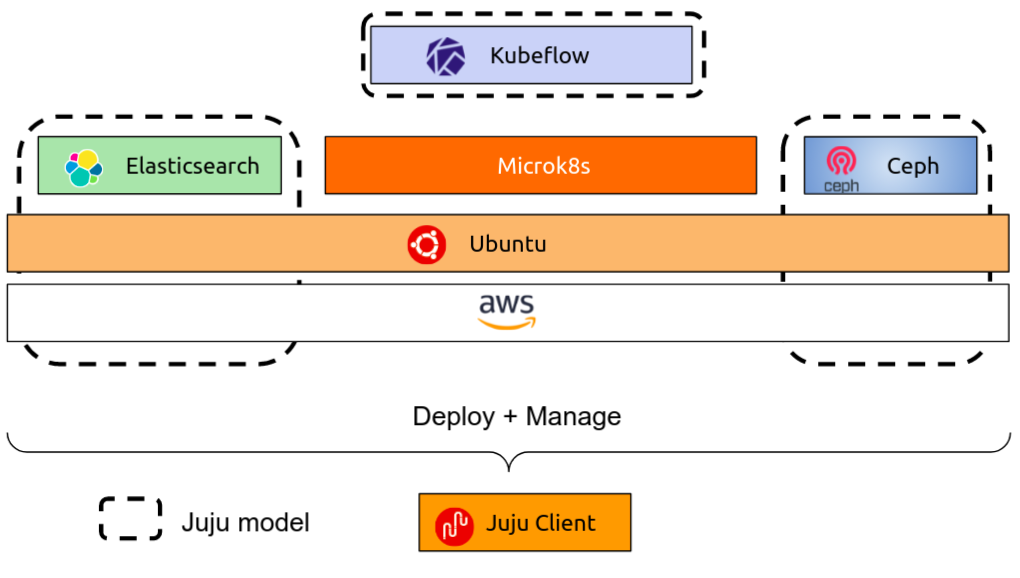
What is Kubeflow? Kubeflow is the open-source machine learning toolkit on top of Kubernetes. Kubeflow translates steps in your data science workflow into Kubernetes jobs, providing the cloud-native interface for your ML libraries, frameworks, pipelines and notebooks. Read more about Kubeflow Notebooks in Kubeflow Within the Kubeflow dashb
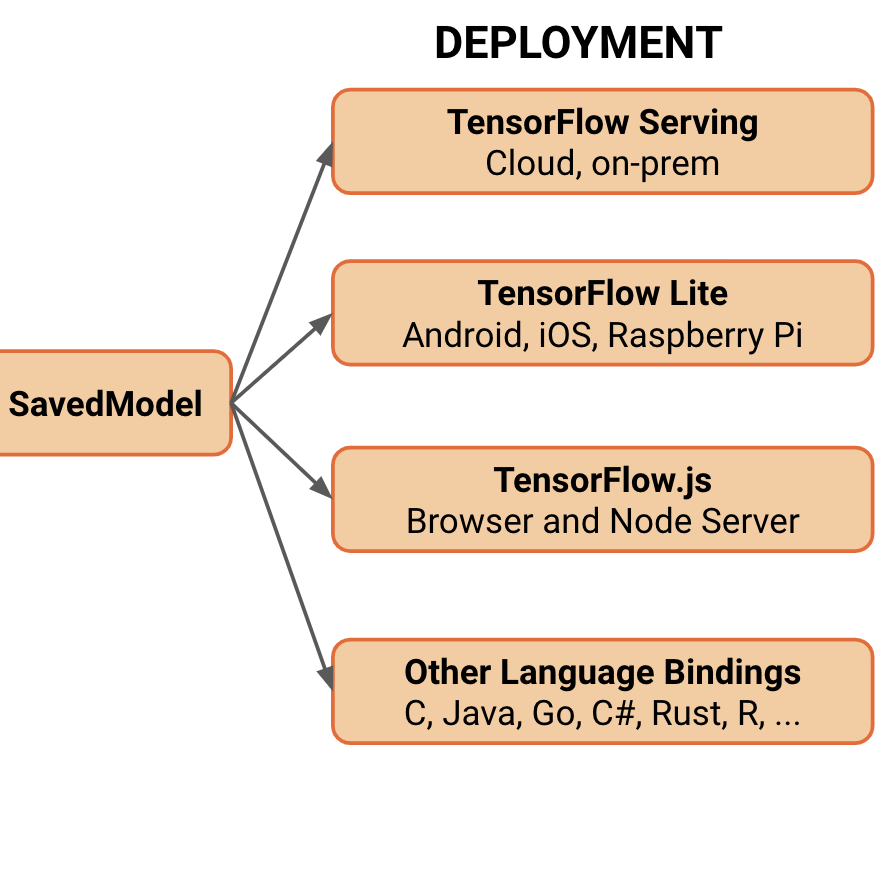
TL;DR: How you deploy models into production is what separates an academic exercise from an investment in ML that is value-generating for your business. At scale, this becomes painfully complex. This guide walks you through industry best practices and methods, concluding with a practical tool, KFServing, that tackles model serving at scal

TL;DR: KFServing is a novel cloud-native multi-framework model serving tool for serverless inference. A bit of history KFServing was born as part of the Kubeflow project, a joint effort between AI/ML industry leaders to standardize machine learning operations on top of Kubernetes. It aims at solving the difficulties of model deployment to

Since 2009, Juju has been enabling administrators to seamlessly deploy, integrate and operate complex applications across multiple cloud platforms. Juju has evolved significantly over time, but a testament to its original design is the fact that the approach Juju takes to operating workloads hasn’t fundamentally changed; Juju still provid

Running an Artificial Intelligence (AI) infrastructure on premise has major challenges like high capex and requires internal expertise. It can provide a lot of benefits for organisations that want to establish an AI strategy. The solution outlined in this post illustrates the power and the utility of Juju, a charmed Operator Lifecycle Man

AI in telecom is more complicated due to regulatory and security requirements. With containers setting up an environment for data scientists is much easier.