
Blog posts tagged "Juju"

Hybrid cloud and multi-cloud are two exclusive terms that are often confused. While the hybrid cloud represents a model for extending private cloud infrastructure with one of the existing public clouds, a multi-cloud refers to an environment where multiple clouds are used at the same time, regardless of their type. Thus, while the hybrid

Two industry trends point to a gap in DevOps tooling chosen by many. Operations teams need more than an Infrastructure-as-Code approach, but a complete model-driven operations mentality. Learn how Canonical has addressed these concerns to create multiple world-leading products.

Should you deploy Apache Spark to Kubernetes? Learn how model-driven operations have enabled one data engineering team to evaluate several options and come to an ideal solution.

Canonical is proud to announce the availability of Juju 2.7. This new release introduces a range of exciting features and several improvements which enhance Juju across various areas. To learn more about Juju, visit our page. Kubernetes extensions Juju is becoming the simplest way to deploy and manage your container-centric workloads. Thi

“The best thing about Juju is that it is very flexible. It is easy to look for existing charms in the charm store and you adapt them to your needs.”

Yahoo! Japan, originally formed as a joint venture between Yahoo! and SoftBank, is one of the most popular internet advertising, search engines and e-commerce sites in the country and employs over 6000 people. Due to having such scale and volume of users, Yahoo! Japan required outside help to build their IaaS (infrastructure as a service)
As developers, we do not always have access to a production-like environment to test new features and run proof-of-concepts. This is why it can be very interesting to deploy Kubernetes on a single machine. Of course, there is the new microk8s snap that allows a super fast deployment of a k8s cluster on a laptop

Ansible vs Terraform vs Juju vs Chef vs SaltStack vs Puppet vs CloudFormation – there are so many tools available out there. What are these tools? Do I need all of them? Are they competing with each other or cooperating? The answer is not really straightforward. It usually depends on your needs and the particular

This is a guest blog by Kara Todd, Director, Linux, IBM Z and LinuxONE Enterprises today need a highly secure, and flexible system to support their initiatives, and for that system to grow and evolve for tomorrow. The latest LinuxONE system was designed to support mission-critical initiatives and allow enterprises to be innovative as they

Deciding whether to automate workloads, while designing your ICT infrastructure, is trivial. It’s 2019 and automation is everywhere around. However, deciding which DevOps paradigm to choose and which tool to use, may not be that obvious. In order to assist you with the ‘declarative vs imperative’ decision-making process, this blog briefly

Today, Canonical announces its Charmed OpenStack on Ubuntu has been selected by BT as a key component of its next generation 5G Core. Canonical, the company behind Ubuntu, will provide the open source virtual infrastructure manager (VIM) as part of BT’s Network Function Virtualisation (NFV) program, and the transition to a cloud-based Cor

Are you getting maximum value from your big data? Despite most businesses understanding the power and competitive advantage they could gain from harnessing their big data more effectively and leveraging it more efficiently, it’s not an easy goal to achieve. That’s why we’ve partnered with Spicule to co-present, ‘How to harness big data fo
The appeal of Kubernetes is universal. Application development, operations and infrastructure teams recognise diverse reasons for its immediate utility and growing potential — a testament of Kubernetes’ empathetic design. Web apps, galvanised by the 12 factor pattern as well as microservice-structured applications find a native habitat in
Amazon Web Services (AWS) announced the availability of their new Amazon EC2 A1 instances powered by custom AWS Graviton processors based on the Arm architecture, which brings Arm to the public cloud as a first class citizen. Arm based processors provide a number of benefits in terms of density and power-consumption which ultimately resul
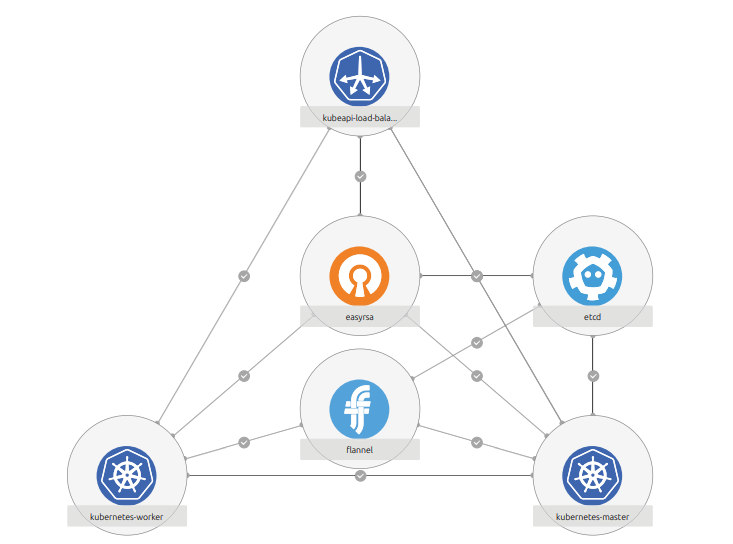
With developers increasingly moving towards microservices – and with the growing prevalence of the cloud as the default platform – software has become more complex than ever. While installing all of the interconnected applications that make up a modern software stack is becoming easier, the real sting in the tail comes on day two and

Canonical and Spicule have joined forces to bring your business a better option for open source big data and streaming analytics. You can learn more about us at some of our upcoming events – read on to find out more. Or, jump right in and get started using JAAS to deploy a fully supported Hadoop