

Bill Wear
34 posts

It’s easy to see commits as the be-all and end-all of open source. They aren’t. This isn’t your run-of-the-mill post. I’ll come right to the point. It’s time to chmod some perspectives about life, the universe, and everything, at least in the realm of open source. The thesis? Viewing your fellow devs as comrades isn’t

Accessing the BIOS; making a plan My next step is to confirm whether or not the N33 NUC will PXE boot. A moderate Google search didn’t turn up any active documentation that confirmed this. There were feature listings on Amazon for similar NUCS, but who knows if those are reality or marketing? The obvious thing

Part 1: The hardware setup As a first attempt at trying MAAS outside the lines (MOTL), let’s pick a random, inexpensive Next Unit of Computing (NUC). Indeed, let’s start with a Minis Forum N33, which is older and “out of print.” The relevant forum is offline, and manuals are hard to Google up. Nice challenge.

The power of community-backed open source: a Canonical perspective The open-source advantage Open-source software offers unparalleled freedom to use, modify, and distribute code. But freedom comes with responsibilities, often making it challenging for businesses and organisations to manage and support these applications. Canonical stands

Introduction Open source projects are a testament to the possibilities of collective action. From small libraries to large-scale systems, these projects rely on the volunteer efforts of communities to evolve, improve, and sustain. The principles behind successful open source projects resonate deeply with the divide-and-conquer strategy, a

Far from the humdrum of server setups, this is about unusual deployments – Raspberry Pis, loose laptops, cheap NUCs, home appliances, and more. What the heck is stormrider deploying this week?

“He’s dead, Jim.” Dr. McCoy DHCP is dead; long live DHCP. Yes, the end-of-life announcement for ISC DHCP means that the ISC will no longer provide official support or updates for the software. Our ever-faithful, omnipresent friend — the familiar dhcpd daemon — is retiring, albeit over a really long walk to that cabin in the

We want you to join our Ubuntu circle, and help us document MAAS. More minds, more eyes, more hands make better doc.

The Ubuntu circle: We are because you are The MAAS 3.3 Beta 1 release is out. You should take a look. Normally, a blog like this would wait for the final release. And that blog will still happen, later, but this feels like a watershed moment: There are some significant new features, including better search

Being the best open-source company in the world means building the best open-source documentation. That’s means giving appropriate respect for ownership and prior art. We crave your feedback about how to best make that happen.

Prologue As programmers and tech writers, we are creators, and we are knowledge workers. We strive to do rare and valuable work, regardless of the circumstances, what Dartmouth professor Cal Newport calls deep work. Deep work is hard and difficult. At Canonical, we are specifically committed to doing things that are simultaneously hard an
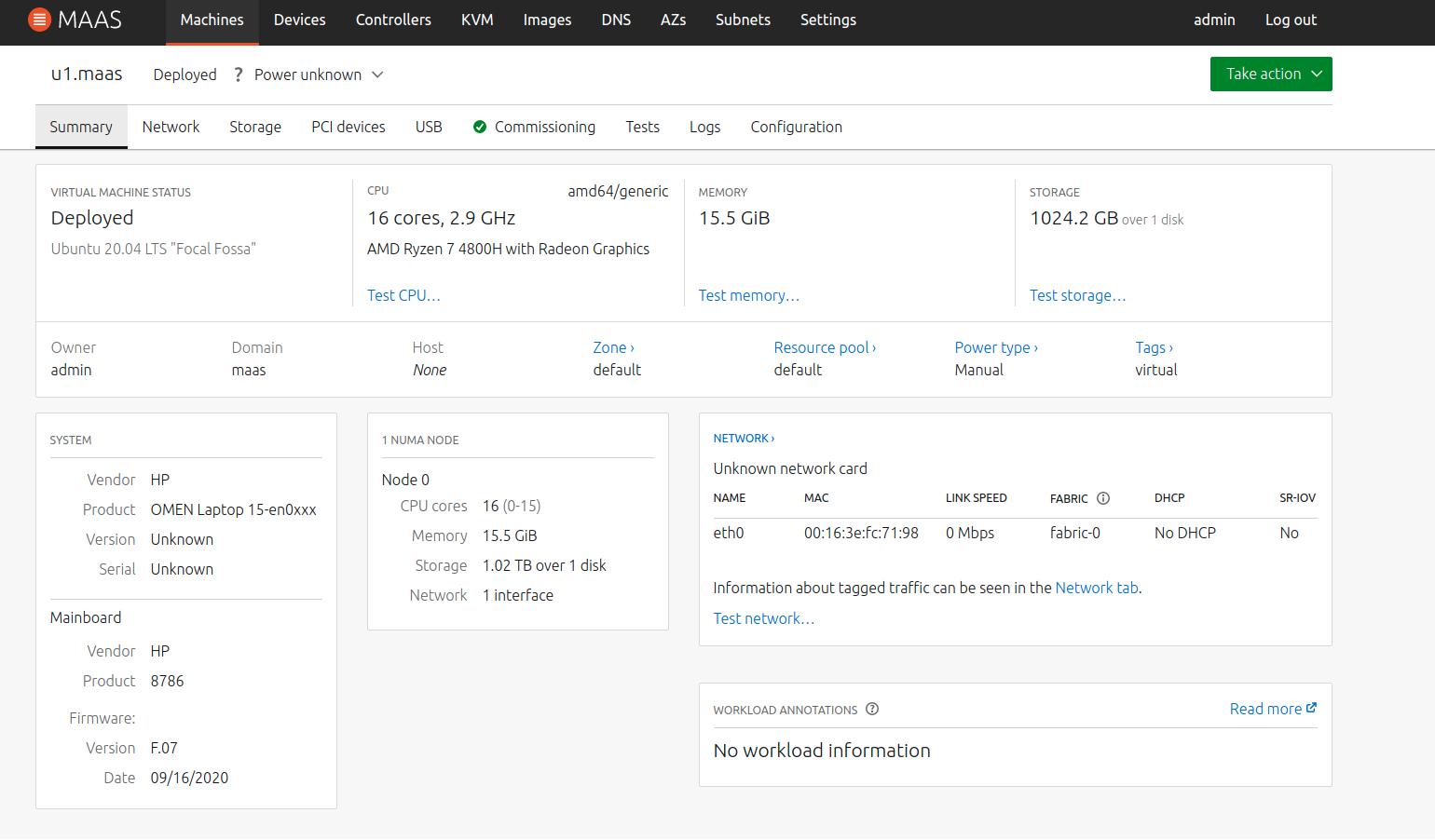
Back a few months ago, we did a feature poll on our MAAS forum, and the most-requested new feature turned out to be “Recommission/rescan a machine after it has been deployed“. With the release of MAAS 3.1, we’ve added that feature, making MAAS an even better choice for linux deployment tools. Here’s a sample of

We are happy to announce that MAAS 3.1 has been released. Bare metal provisioning just got even easier! MAAS 3.1 brings some of the most frequently-requested features into the product. A lot of this is serendipity — or maybe you could say that it’s about like minds tracking the same problem. Either way, we’re doing

We want to make it possible to deploy MAAS in an existing datacenter, and have it keep track of machines that already have a deployed workload — without disturbing machine or workload. Currently, in order to get a machine into MAAS, with correct hardware information, you have to network boot the machine and let MAAS

With the release of MAAS 3.0, we moved LXD virtual machines out of Beta. Several articles in the MAAS documentation address LXD. Since no document ties all these features together, though, it’s time for a topical blog about LXD. About LXD LXD, pronounced “lex-DEE,” is a container manager, as well as a virtual machine manager.

This blog title should really be, “Why you always, always, always want conflict detection turned on on all the networks MAAS touches,” but that’s really long as a title. But hear me out. As promised, here is another DHCP blog, this time explaining how you can have multiple DHCP servers on the same subnet, serving